 English
  Deutsch
  Español
  Français
  Italiano
  Norsk bokmål
  Svenska
  Dansk
Dansk 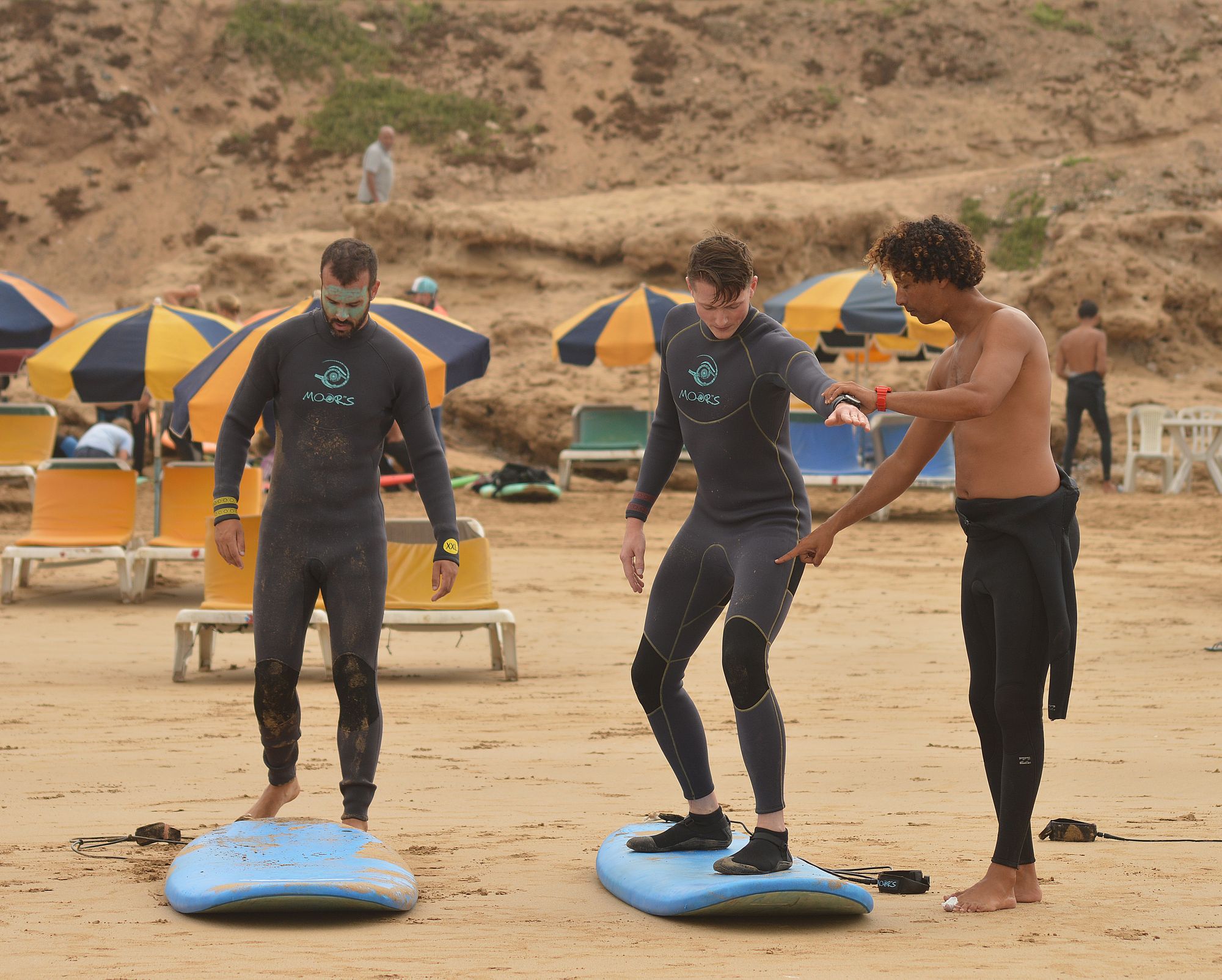
Taghazout is famous for its long point breaks, but it is also one of the best places in Europe’s winter-sun belt to learn to surf. The bay has sandy beaches with soft, rolling waves, the water is mild all year and there is a lesson day almost every day. This guide explains how surf lessons in Taghazout work, where you learn, how fast you can progress and how to get the most out of your first week.
Quick answer: surf lessons in Taghazout
- Where: sandy beach breaks such as Tamraght and Banana Beach near Aourir, chosen each morning for the conditions.
- How long: two hours per lesson, timed around the tide.
- How fast: most beginners stand up on white water within their first two or three sessions.
- Included in our packages: instructor, soft board, wetsuit and the transfer to the beach.
On this page
Why Taghazout Is a Great Place for Surf Lessons
Three things make surf lessons in Taghazout so effective. First, variety: within a short drive there are beaches for every size of swell, so an instructor can almost always find small, clean waves. Second, the climate: more than 220 hours of sunshine every month and water between about 17 and 22 °C mean you rarely lose a day to the weather. Third, rhythm: when you surf every day for a week, your body remembers what it learned the day before, and progress is much faster than with the odd lesson at home.
Where Surf Lessons in Taghazout Take Place
The famous points such as Anchor Point and Killer Point break over rock and are strictly for experienced surfers. Beginners learn on the sandy beaches a short drive south, where waves break gently and you can stand in waist-deep water. Your instructor picks the spot each morning according to the swell, the wind and the tide.
| Spot | Type of wave | Level | Why it works for lessons |
|---|---|---|---|
| Tamraght (Devil’s Rock, Crocro) | Sandy beach break | Beginners to improvers | Gentle waves over sand and several peaks, so groups have room |
| Banana Beach (Aourir) | Sandy beach break | Complete beginners | Soft, rolling waves that are ideal for first lessons |
| Imsouane | Long, slow right-hander in a bay | Improvers and longboarders | A day trip to practise riding along a green wave |
What a Two-Hour Surf Lesson Looks Like
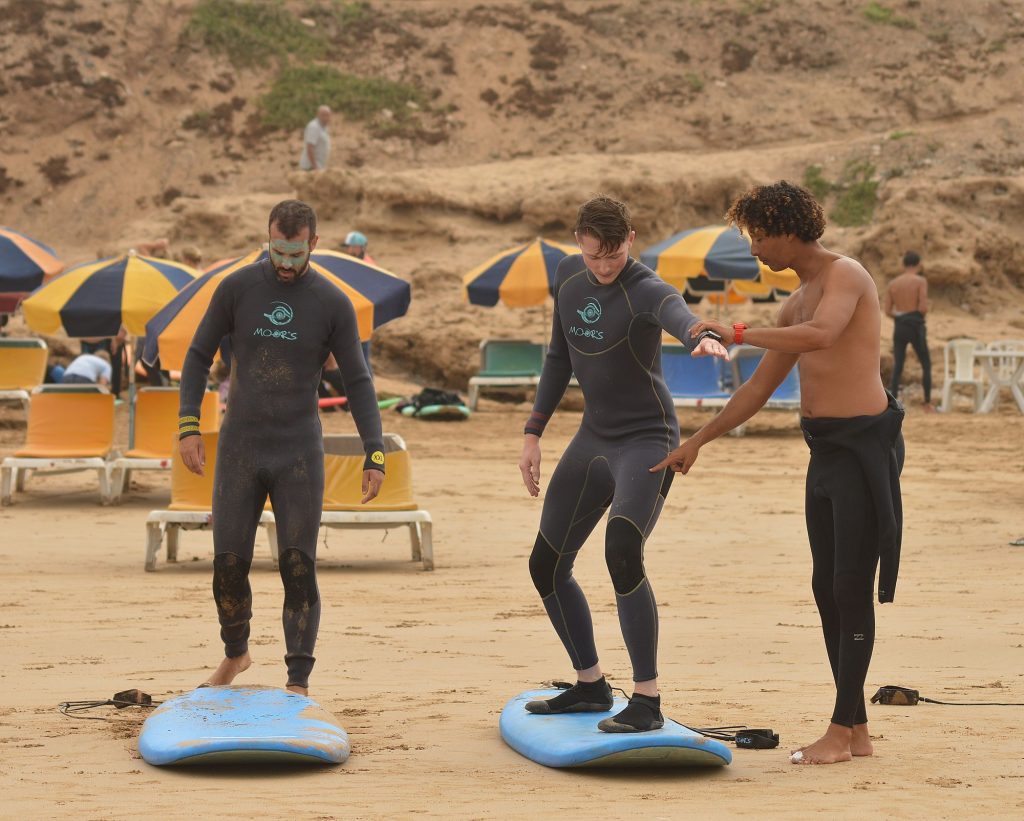
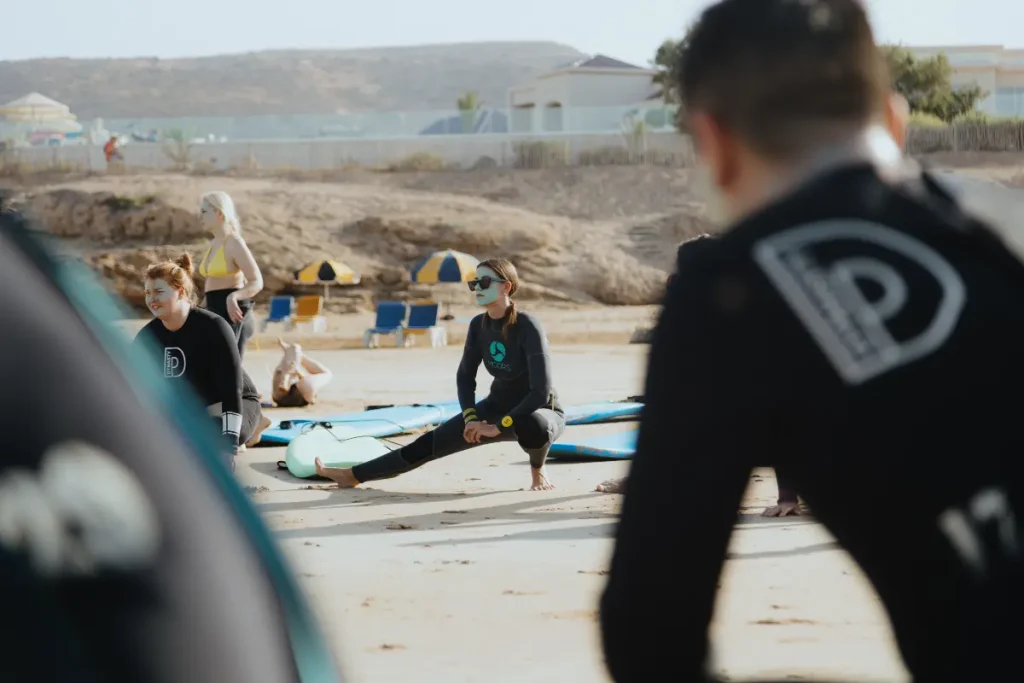
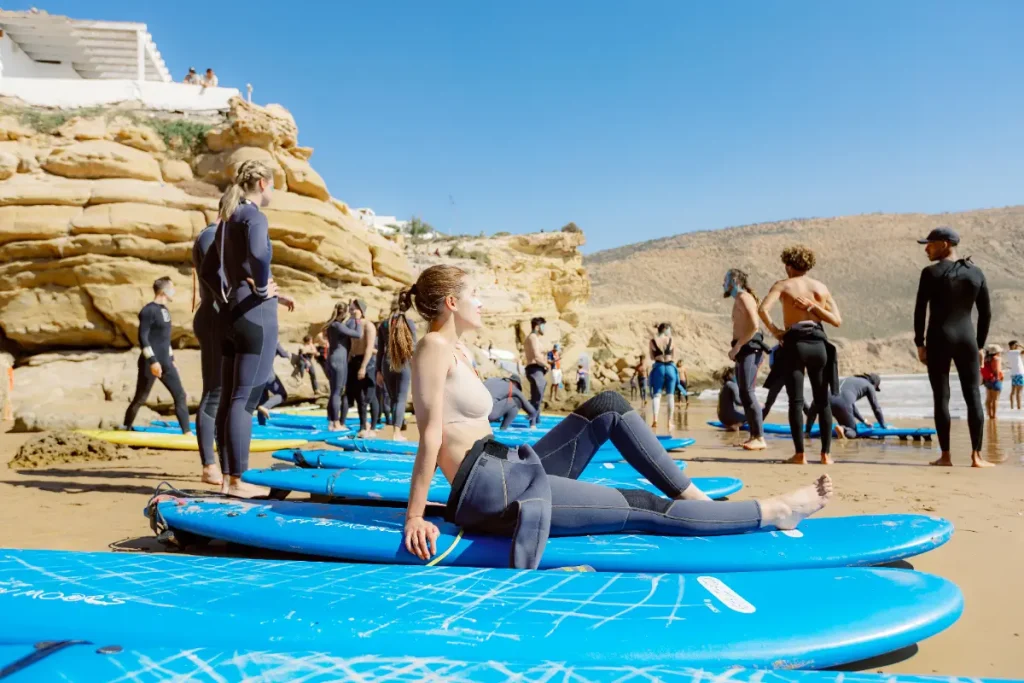
- Warm-up and stretching on the beach to loosen shoulders, hips and back.
- A short theory session: how waves break, where to sit, safety and surf etiquette.
- Practising the pop-up on the sand until it feels natural.
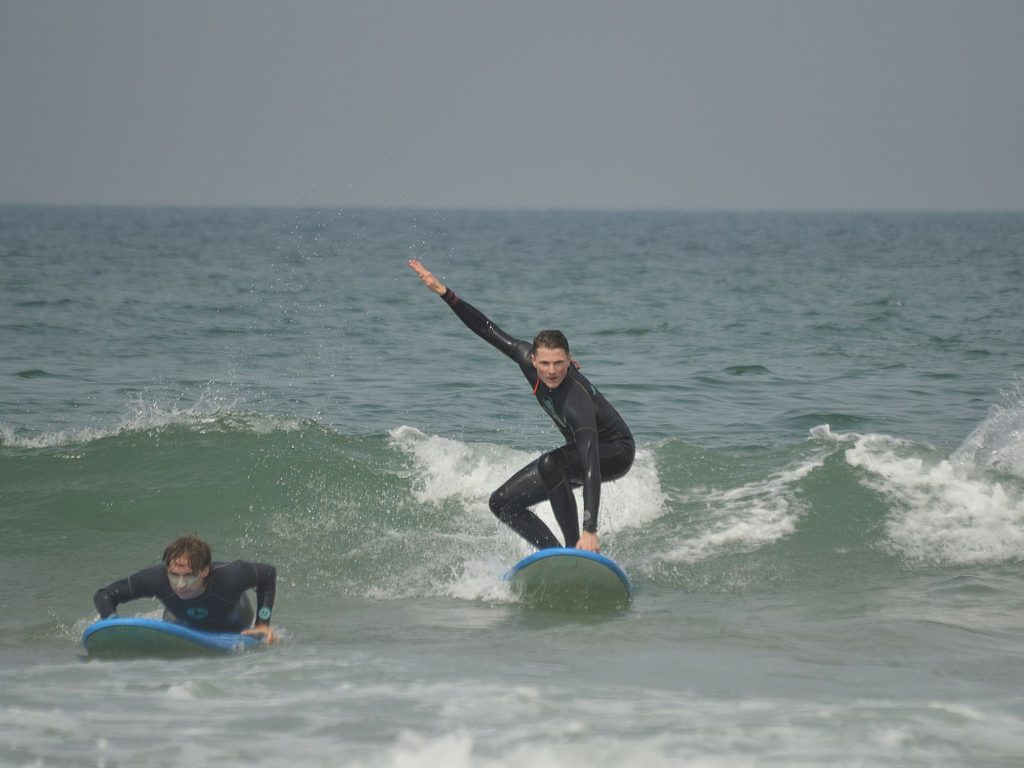
- Time in the water catching white-water waves, with your instructor next to you.
- Feedback at the end so you know what to work on next time.
Your First Week: How Fast Can You Learn to Surf?
Everyone learns at their own pace, but with a lesson every day most people follow a similar path. This is a typical first week for complete beginners at our surf camp in Taghazout:
| Days | Focus | What most people achieve |
|---|---|---|
| 1–2 | Safety, paddling, the pop-up | Riding white water lying down, first attempts to stand |
| 3–4 | Standing up and balance | Standing up on white water on your own |
| 5–6 | Steering and reading waves | Angling along the wave instead of riding straight to the beach |
| 7 | Paddling out past the white water | First unbroken green waves with your instructor |
Which Board and Wetsuit Beginners Use
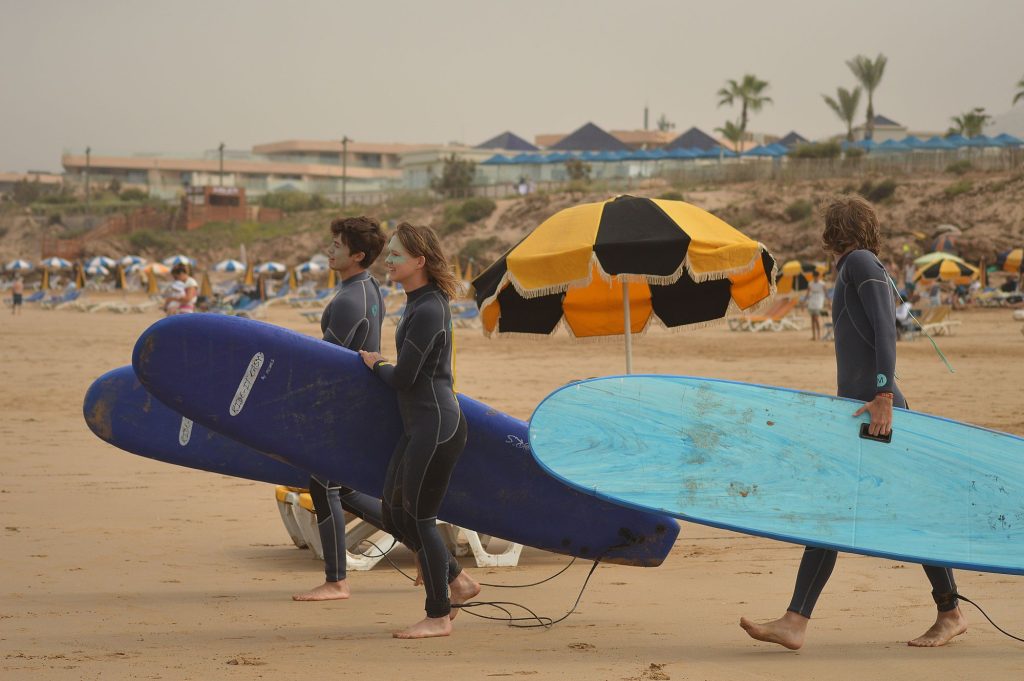
Beginners learn on long, wide soft-top boards, usually between 8 and 9 feet. The extra volume makes them stable and easy to paddle, and the foam deck is soft if you fall on it. As your balance improves, your instructor moves you to a shorter board. For the wetsuit, most surfers use a 3/2 mm full suit for most of the year and a 4/3 mm in the coolest months; boards and wetsuits are included in all our lesson packages.
Surf Etiquette and Ocean Safety for Beginners
- The surfer closest to the peak has priority: never drop in on someone who is already riding.
- Paddle wide around the line-up instead of through the middle of it.
- Keep hold of your board: a loose board can hurt the people around you.
- If a current pulls you out, do not fight it: paddle parallel to the beach until you are free, and raise an arm to call for help.
Our tip: falling is part of learning. A soft board, a wetsuit and waist-deep water keep it safe, so relax, laugh and try again: the surfers who enjoy the wipeouts are the ones who progress fastest.
How to Prepare Before Your Trip
You do not need to be an athlete to learn to surf, but a little preparation makes the first days easier. Swimming a few times a week builds the shoulder endurance you need for paddling, push-ups and planks help with the pop-up, and gentle stretching for hips and back makes you more comfortable on the board. If you can, practise the pop-up on the floor at home: lie on your stomach, place your hands under your chest and jump to your feet in one move.
Five Common Mistakes in Surf Lessons for Beginners
Instructors see the same few habits again and again. Knowing them before your first session saves you days of frustration:
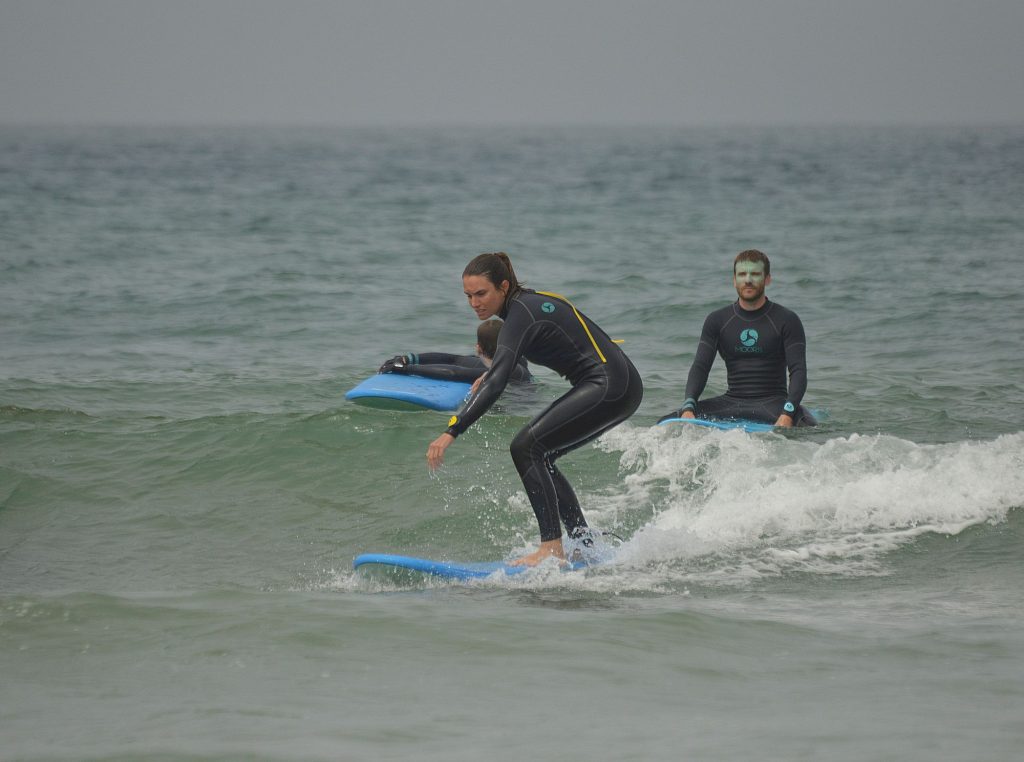
- Looking down at the board. Your body follows your eyes, so look at the beach or along the wave, not at your feet.
- Lying too far back or too far forward. Too far back and the board stalls; too far forward and the nose dives. Your instructor will show you the sweet spot.
- Standing up in stages. Kneeling first feels safer but makes you wobble; practise one smooth jump from chest to feet.
- Standing with straight legs. Bend your knees and keep your weight low and centred over the board.
- Surfing when exhausted. Surfing tired is when bad habits and accidents happen; a short rest on the beach makes the last waves much better.
What to Bring for Your Surf Lessons
- Swimwear to wear under the wetsuit, and a towel
- High-factor, reef-safe sunscreen and sunglasses
- A water bottle, flip-flops and a warm layer for the evenings from November to March
- A small waterproof bag for your phone on the beach
Surf Lessons With Twist Surf: Which Package?
All our packages with surf lessons in Taghazout include two-hour lessons with transfers, a board and a wetsuit, accommodation and three meals a day. The main difference is how many days you surf:
| Package | Lesson days | Price | Best for |
|---|---|---|---|
| All Inclusive | 7 | €499 per person | The fastest progress for beginners |
| Premium | 6 | €649 per person | Surf plus five yoga sessions |
| Family | 7 | €1999 per family | Parents and kids under 14 |
| 5-Day | 5 | €375 per person | A long weekend or a first try |
| Ultimate | 4 | €749 per person | Surf plus trips to Imsouane and Essaouira |
| 3-Day | 3 | €225 per person | A taste of surfing |
Frequently asked questions
Do I need to be a strong swimmer to take surf lessons in Taghazout?
You should be comfortable in the water, but beginner lessons take place in shallow water where you can stand. Tell your instructor if you are a nervous swimmer.
How many surf lessons do I need to stand up?
Most beginners stand up on white water within their first two or three lessons. Riding green waves on your own usually takes a full week of daily lessons or more.
What is the best age to learn to surf?
There is no best age: we teach children, parents and adults who are learning for the first time. What matters most is being comfortable in the water and willing to fall and try again.
When is the best season to learn to surf in Taghazout?
May to October has the smallest waves and the warmest water, so it is the easiest time for complete beginners. You can still learn in winter, as the beach breaks stay much smaller than the points.
Are boards and wetsuits included?
Yes. Every package with lessons includes a soft board and a wetsuit in the right size, plus the transfer to the beach and your instructor.
Which Twist Surf package is best for beginners?
The All Inclusive week gives you a two-hour lesson every day for seven days, which is the fastest way to progress. If you only have a few days, the 5-Day or 3-Day package also includes daily lessons.
See the All Inclusive surf camp week
Best time to surf in Taghazout, month by month


