 English
  Deutsch
  Español
  Français
  Italiano
  Norsk bokmål
  Svenska
  Dansk
Dansk 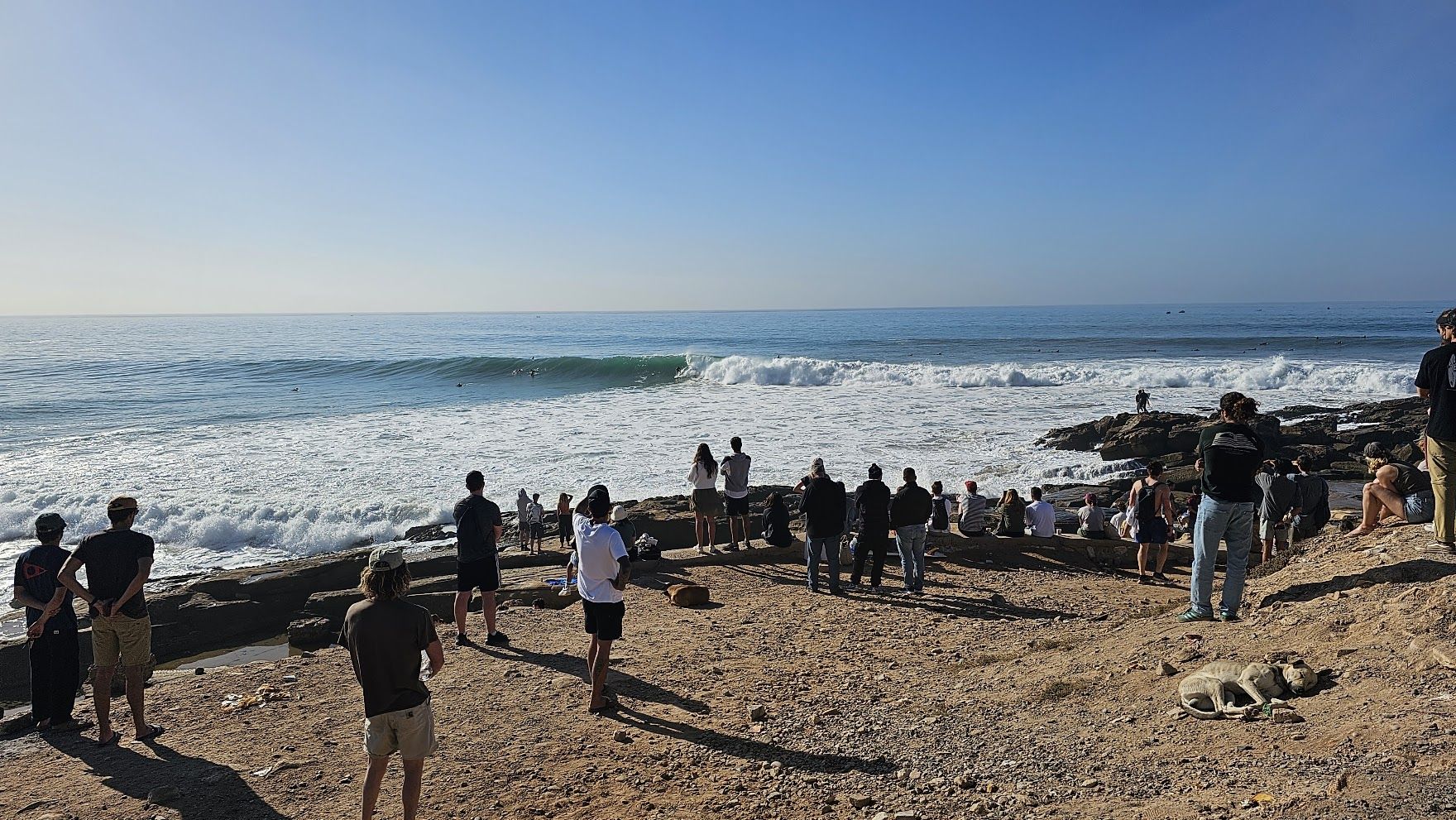
A Taghazout surf forecast can look like a wall of numbers, arrows and colours, but once you know what to look for, the Taghazout surf forecast tells you exactly where to surf tomorrow. The area has a dozen spots within half an hour, from gentle beaches to heavy points, and each one needs different conditions. This guide explains the four things that matter, swell, period, wind and tide, shows which spot works in which conditions and lists the forecast sites locals actually use.
Quick answer: reading the Taghazout surf forecast
- Swell: 0.5–1.2 m is ideal for beginners; the famous points need about 1.5 m or more.
- Period: 10 seconds or more means organised, powerful waves; under 8 seconds means weak, choppy ones.
- Wind: light or from the east (offshore) is best; the north wind usually picks up after lunch.
- Tide: most spots work best from low to mid tide, but each one is different.
On this page
Step 1: Check the Swell Height
The first number on any Taghazout surf forecast is the swell height, usually in metres. It describes the open-ocean swell, not the wave you will ride: a sheltered bay may break at half that size, while an exposed beach can be bigger. As a rule of thumb, 0.5 to 1.2 metres is perfect for lessons and first green waves, 1 to 2 metres suits intermediate surfers on the beaches and smaller points, and the famous right-hand points such as Anchor Point only really wake up at around 1.5 to 2 metres or more with a long period.
Step 2: Look at the Swell Period
The period is the time in seconds between two waves, and on a Taghazout surf forecast it matters as much as the height. Long-period groundswell comes from distant North Atlantic storms, carries more energy and wraps around the headlands into the point breaks. Short-period windswell is generated close to the coast and produces weak, messy waves. The same 1.5-metre forecast can mean perfect lines at 14 seconds or a disappointing mess at 7.
| Period | What it means | Good for |
|---|---|---|
| Under 8 s | Local windswell, weak and choppy | Beginners on sheltered beaches |
| 8–11 s | Mixed swell, fun but less organised | Beginners and intermediates |
| 12 s and more | Groundswell, clean lines and power | The points; beginners need sheltered spots |
Step 3: Read the Wind
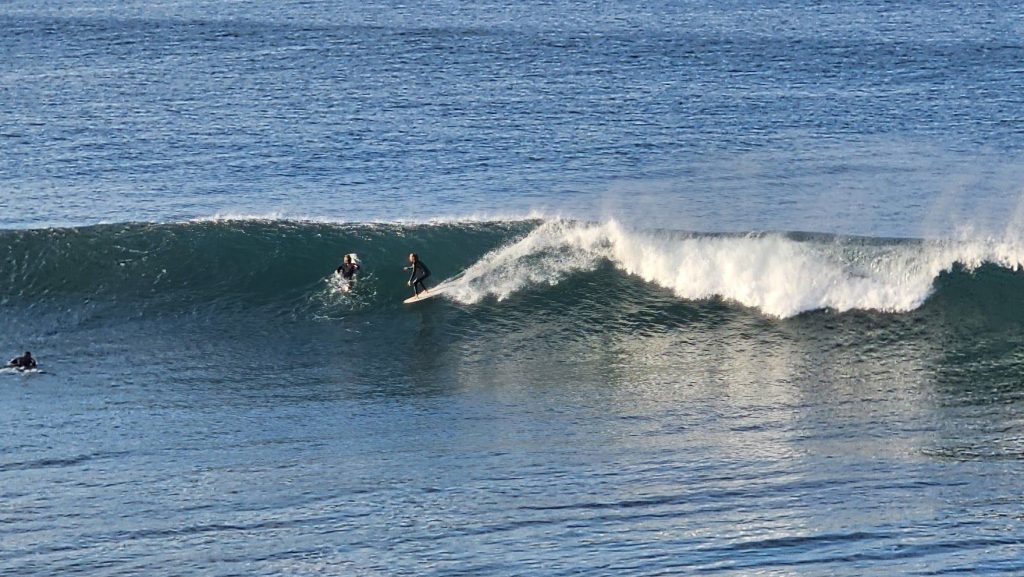
Wind shapes the surface of the waves. Offshore wind blows from the land to the sea and grooms the waves into clean walls; onshore wind blows from the sea and crumbles them. Around Taghazout the coast faces west, so easterly winds are offshore across most of the bay. In spring and summer a north wind often builds after lunch; it is cross-shore on the open beaches, while some of the points are partly sheltered from it. That is why the best sessions are usually in the morning, and why Windguru’s colour-coded wind rows are the first part of the Taghazout surf forecast many locals check.
Step 4: Check the Tide
The tidal range on this coast can reach around three metres on spring tides, which completely changes some spots within a few hours. Many reefs and points break best from low to mid tide and become slow or too full at high tide, while some beaches close out at dead low. Always read the tide chart together with the Taghazout surf forecast: the right spot at the wrong tide can be flat or dangerous.
Step 5: Match the Taghazout Surf Forecast to the Right Spot
This is where local knowledge makes the difference. The table below is a simplified guide to how the main spots react to the Taghazout surf forecast; real conditions vary with each swell, so use it as a starting point and always look at the water before you paddle out.
| Spot | Level | Typical swell | Notes |
|---|---|---|---|
| Banana Beach | Beginner | 0.5–1.5 m | Sheltered, soft and slow; good when other spots are too big |
| Tamraght & Devil’s Rock | Beginner to intermediate | 0.5–1.5 m | Sandbanks; best in light or easterly wind |
| Hash Point & Panoramas | Improver to intermediate | 1–2 m | Friendly rights in front of the village |
| Anchor Point & Killer Point | Advanced | 1.5 m+ at 12 s+ | Winter groundswell; rocky and crowded |
| Tamri | Intermediate | 0.5–1.5 m | Picks up the most swell on small days |
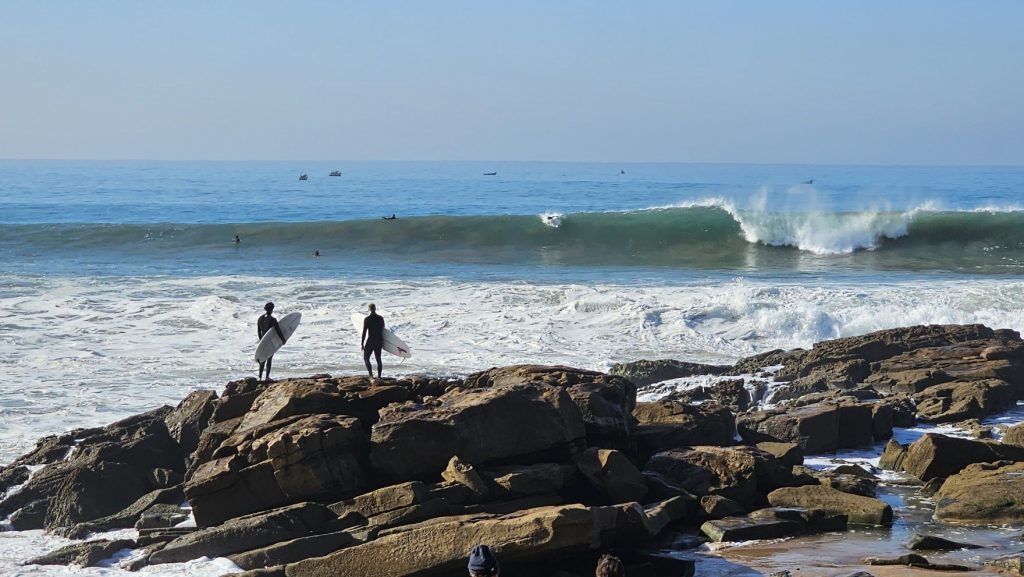
Our tip: a Taghazout surf forecast is a prediction, not a promise. Check it the evening before to plan, then look again at dawn: the wind and swell often change overnight, and a quick look at the water tells you more than any app.
Where to Check the Taghazout Surf Forecast
- Surf-Forecast.com: detailed pages for individual breaks such as Hash Point and Banana Point, with a simple star rating.
- Windguru: the local favourite for wind, with colour-coded rows that make offshore mornings easy to spot.
- Surfline: global swell models and forecaster notes; it absorbed Magicseaweed when that site closed in 2023.
- A tide table app: essential, because the tide changes which spot works during the day.
Frequently asked questions
What is a good Taghazout surf forecast for beginners?
Around 0.5 to 1.2 metres of swell, light or easterly wind and a mid tide is ideal. Your instructor will choose a sheltered beach such as Banana Beach if the swell is bigger.
Which website is best for the surf report in Taghazout?
Most locals combine Surf-Forecast for the swell at each break, Windguru for the wind and a tide app. Surfline is useful for longer-range swell outlooks.
What wind direction is offshore in Taghazout?
Because the coast faces west, easterly and north-easterly winds are offshore at most spots. The north wind common in the afternoon is cross-shore on the beaches.
What does the swell period mean on a surf forecast?
It is the time in seconds between waves. A longer period, 12 seconds or more, means more powerful, better-organised waves that reach the point breaks; under 8 seconds usually means weak, choppy surf.
Is there surf in Taghazout all year?
Yes. Winter brings the biggest swells for the points, while summer has smaller, warmer waves that are perfect for learning. There are very few completely flat days.
Do surf camps check the forecast for you?
Yes. At our surf house the guides read the Taghazout surf forecast every evening and choose the spot and time for each group, so you simply get in the van and surf the best conditions for your level.
The complete guide to Taghazout surf spots
Best time to surf in Taghazout, month by month
Taghazout beaches: the 9 best beaches nearby


