 English
  Deutsch
  Español
  Français
  Italiano
  Norsk bokmål
  Svenska
  Dansk
Dansk 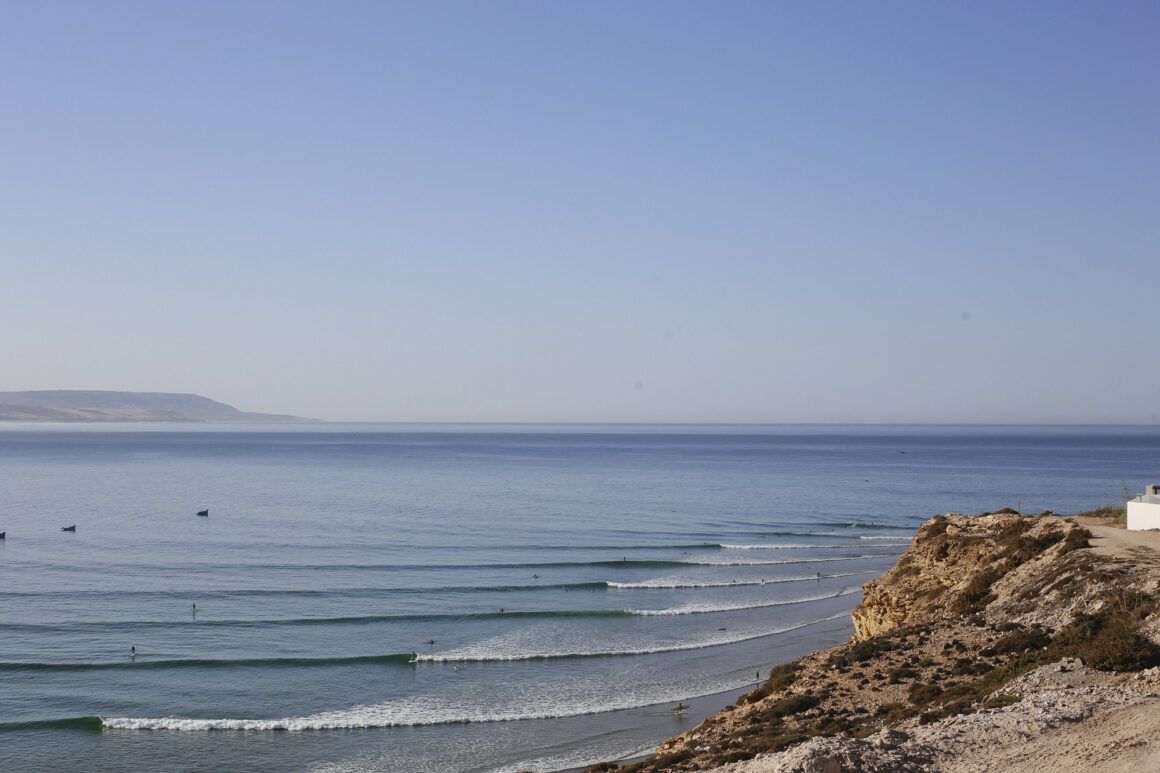
The Imsouane surf is famous for one thing above all: a gentle right-hand wave that peels along a sheltered bay for several hundred metres, giving you the longest ride of your life. This small fishing village between Agadir and Essaouira has two very different waves, blue fishing boats in the harbour and some of the best sunsets on the coast. Here is everything you need to know to surf Imsouane, whether you come for a day trip from Taghazout or stay for a few nights.
Quick answer: the Imsouane surf
- La Baie: a long, slow right for beginners and longboarders, best from low to mid tide.
- La Cathédrale: a faster, more powerful wave for intermediate and advanced surfers.
- Best season: October to April, when the winter swells are big enough to wrap into the bay.
- Getting there: about 1 hour 30 by road north of Taghazout.
On this page
Where Is Imsouane, Morocco?
Imsouane sits on the Atlantic coast roughly halfway between Agadir and Essaouira, on a headland where the coast turns and forms a deep, sheltered bay. The village is built around a working fishing port, and life still follows the boats: in the afternoon you can buy the catch straight from the harbour and have it grilled in a café. Because it sits away from the main road, it feels quieter than Taghazout, which is a big part of the Imsouane surf charm.
| From | Approximate time by car |
|---|---|
| Taghazout | About 1 hour 30 |
| Agadir Al Massira Airport | About 2 hours 15 |
| Essaouira | About 1 hour 45 |
| Marrakech | About 4 hours |
Imsouane Surf Spots: La Baie and La Cathédrale
The Imsouane surf revolves around two waves on either side of the harbour. They are only a few minutes’ walk apart, but they feel like different worlds, so it is worth knowing which one suits you before you paddle out.
| La Baie | La Cathédrale | |
|---|---|---|
| Type of wave | Long, slow right-hand point | Faster peaks, rights and lefts |
| Level | Beginners to intermediates, longboarders | Intermediate and advanced |
| Best tide | Low to mid tide | Mid tide |
| Swell needed | Medium to big; it is sheltered | Small to medium; it catches more swell |
| Board | Longboard or big soft-top | Shortboard or fish |
La Baie (the Bay)
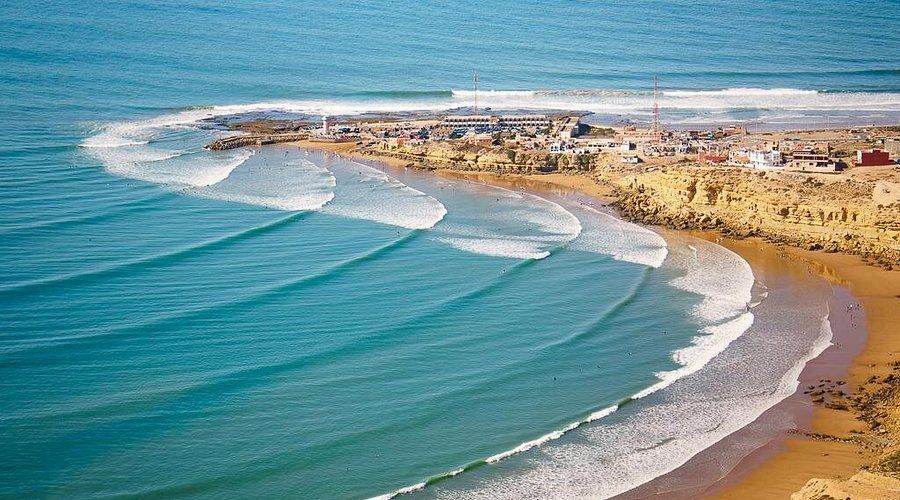
This is the wave that made the Imsouane surf famous. Swell wraps around the headland and peels down the inside of the bay in a long, slow line, often for several hundred metres on a good day. It is soft and forgiving, so beginners who can already stand up, and above all longboarders, can link turns, walk the board and ride further than they ever have. Take-off is next to the harbour wall, and at the end of your ride you walk back along the beach instead of paddling, which saves a lot of energy.
La Cathédrale (Cathedral Point)
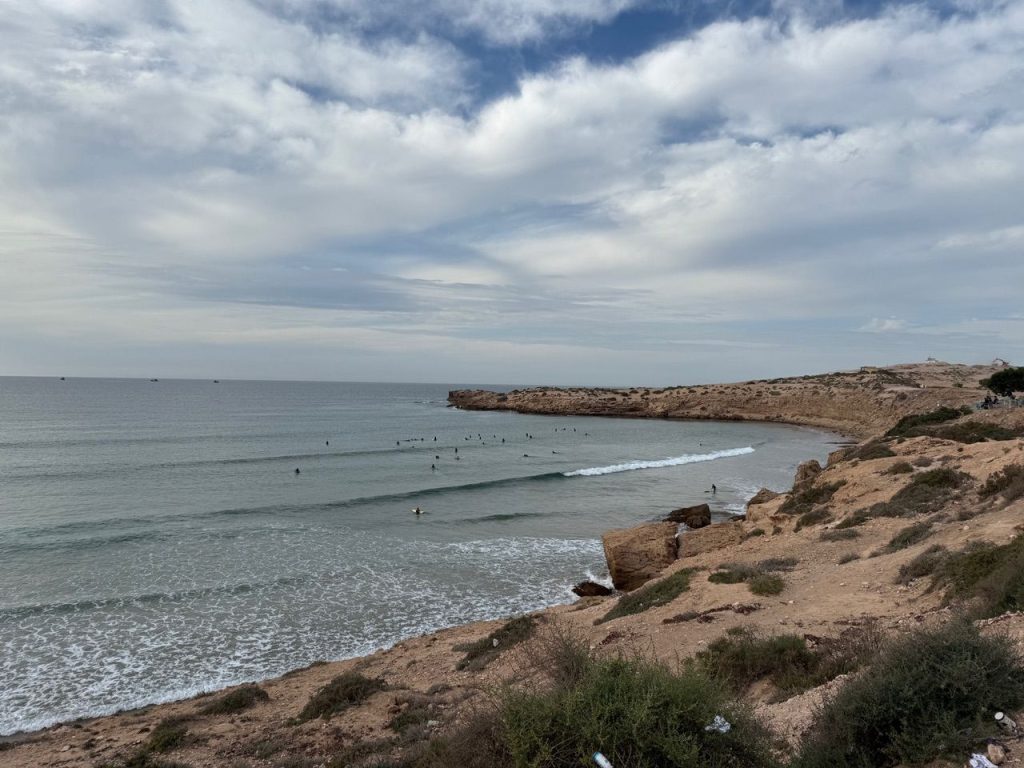
On the other, more exposed side of the harbour, La Cathédrale picks up much more swell. The waves are faster, steeper and more powerful, with peaks that break both left and right in front of the cliffs. It works on days when La Baie is too small, so it is often where the intermediate and advanced part of the Imsouane surf crowd goes. Beginners should watch from the cliff top: the currents and power here are a different league.
Best Time for the Imsouane Surf
Because La Baie is so sheltered, it needs a solid swell to wake up. That makes October to April the prime Imsouane surf season, when North Atlantic storms send long-period swells down the coast. On the biggest days, when the points around Taghazout are too heavy for most people, La Baie can be perfect. In summer the bay is often flat or tiny, although La Cathédrale can still have fun waves. The north wind that blows most afternoons is largely offshore or blocked in the bay, which is another reason it holds its shape so well.
Imsouane Surf Tips for Beginners and Longboarders
- Only one surfer per wave: La Baie is long, so a single drop-in can ruin a 300-metre ride for someone else.
- Watch out for the harbour wall and moored boats at take-off, and for swimmers on the inside.
- Go at dawn or late afternoon: the middle of the day is the busiest time in the water.
- Bring a longboard or big soft-top: you will catch more waves and enjoy the long walls far more.
Our tip: before you plan an Imsouane surf day, check the swell forecast. If the swell is small, La Baie will be flat and you are better off at the beaches near Taghazout; when a big swell hits, Imsouane is where you want to be.
Day Trip from Taghazout or Stay Overnight?
Most visitors combine a base in the Taghazout area with one or two Imsouane surf days. Leave early, surf the morning session, eat fresh grilled fish at the harbour for lunch, surf again in the afternoon and drive back for sunset. At our surf house, guides organise these trips when the forecast is right, so you only go when the bay is actually working. If you have a longer holiday and love longboarding, a night or two in Imsouane lets you surf the dawn and dusk sessions when the water is quietest.
Frequently asked questions
Is Imsouane good for beginners?
La Baie is great for beginners who can already stand up and ride the whitewater. Complete first-timers usually learn faster on the sandy beaches near Taghazout first, then visit Imsouane later in their trip.
How long is the wave in Imsouane?
On a good swell, rides at La Baie can last several hundred metres, which is why it is often called one of the longest waves in Africa.
What is the best tide for the Imsouane surf?
La Baie usually works best from low to mid tide, while La Cathédrale is best around mid tide. Conditions change with each swell, so ask a local guide on the day.
How do I get to Imsouane from Taghazout?
It is about an hour and a half by car along the coast road. Most people go on an organised surf trip or share a private taxi, because public transport is slow and infrequent.
When is the Imsouane surf season?
October to April is the main season, when winter swells are big enough to wrap into the bay. In summer La Baie is often flat, but La Cathédrale can still have waves.
Can I do a surf trip to Imsouane from your surf camp?
Yes. When the swell is right, our guides organise surf trips up the coast to Imsouane with transport and equipment. Ask the team when you arrive and they will pick the best day.
Surfing in Morocco: the 7 best places to surf
The complete guide to Taghazout surf spots


