 English
  Deutsch
  Español
  Français
  Italiano
  Norsk bokmål
  Svenska
  Dansk
Dansk 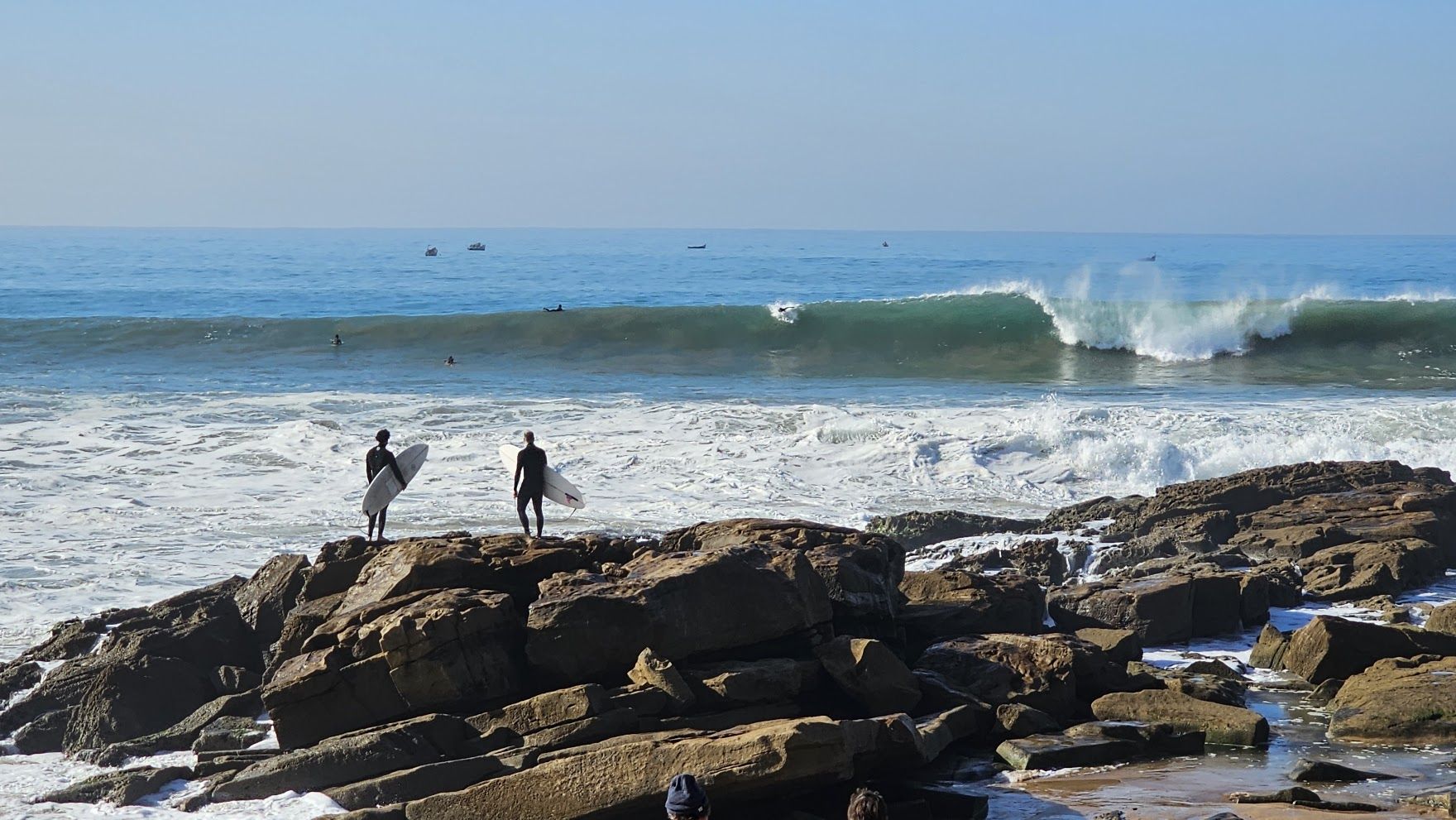
Surfing in Morocco has something for everyone: long right-hand point breaks that feature in surf films, gentle sandy beaches where thousands of people stand up for the first time every year, and warm, sunny weather even in the middle of the European winter. The Atlantic coast is long and full of variety, so the hardest part is choosing where to go. This guide takes you through the seven best places to surf in Morocco, the right season for your level and everything you need to pack.
Quick answer: surfing in Morocco
- Best overall base: the Taghazout area near Agadir, with points for experts and beaches for beginners.
- Best season: October to March for big swells; May to September for small, warm, beginner-friendly waves.
- Wetsuit: a 3/2 mm for most of the year, a 4/3 mm in January and February.
- Getting there: direct flights from most of Europe land in Agadir in about three to four hours.
On this page
Why Surfing in Morocco Is So Good
Morocco faces straight into the North Atlantic, so the same low-pressure systems that bring storms to Europe send long, clean groundswells to its coast. Much of that coast is lined with rocky headlands and bays that bend the swell into right-hand point breaks, the kind of wave surfers travel across the world for. In between are wide sandy beaches that stay small and friendly, which is why surfing in Morocco works for complete beginners and experts in the same week.
Add more than 300 days of sunshine a year in the south, low living costs, and flights of three to four hours from most European cities, and it is easy to see why the country became one of the most popular surf destinations close to Europe.
The 7 Best Places to Surf in Morocco
Here are the main surf spots in Morocco from south to north, with the level they suit and how far they are from Taghazout, the most popular base for surfing in Morocco.
| Region | Best for | Level | From Taghazout |
|---|---|---|---|
| Mirleft & Sidi Ifni | Quiet beaches and reefs | All levels | About 3 hours |
| Agadir beaches | Learning in small waves | Beginners | 30 minutes |
| Taghazout & Tamraght | Famous right-hand points and learner beaches | All levels | Right here |
| Imsouane | One of the longest waves in Africa | Beginners to intermediates | About 1 hour 30 |
| Essaouira & Sidi Kaouki | Wind sports and a UNESCO medina | Intermediates | About 2 hours 30 |
| Safi | Heavy barrels on its famous point | Experts only | About 4 hours |
| Rabat & the north | City surf and summer beach breaks | All levels | A day’s drive |
1. Taghazout and Tamraght
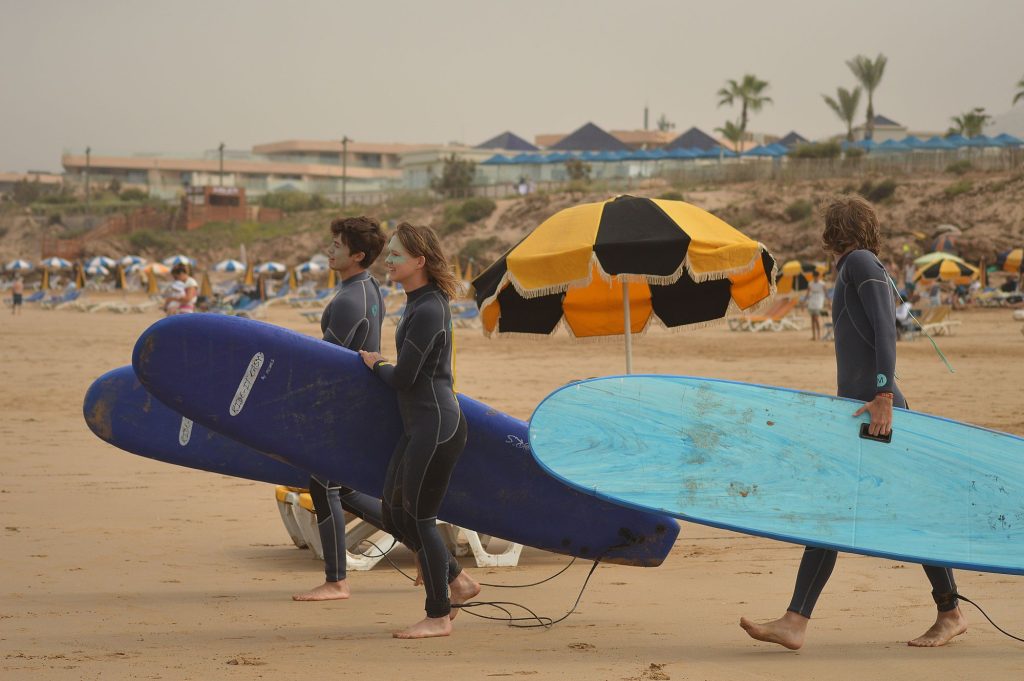
The heart of surfing in Morocco. Within 20 minutes of the village you have Anchor Point, Killer Point and Boilers for experienced surfers, Hash Point and Panoramas for improvers, and the sandy beaches of Tamraght, Devil’s Rock and Banana Beach for beginners. The spots face slightly different directions, so there is nearly always somewhere working, and the village has the biggest choice of surf camps, cafés and surf shops in the country.
2. Imsouane
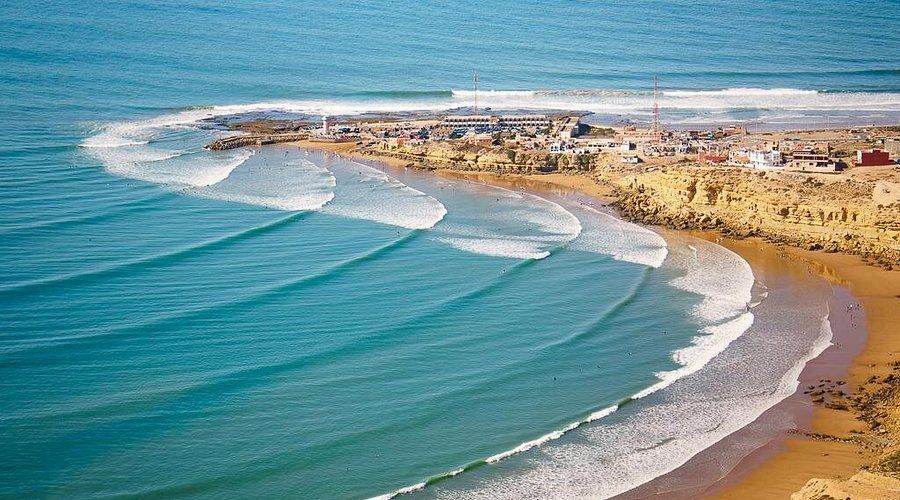
A fishing village an hour and a half north of Taghazout, famous for La Baie, a sheltered right-hand wave that can peel for several hundred metres. It is slow and forgiving, which makes it a paradise for longboarders and improving beginners. Around the headland, La Cathédrale is a faster, more powerful wave for intermediate and advanced surfers.
3. Essaouira and Sidi Kaouki
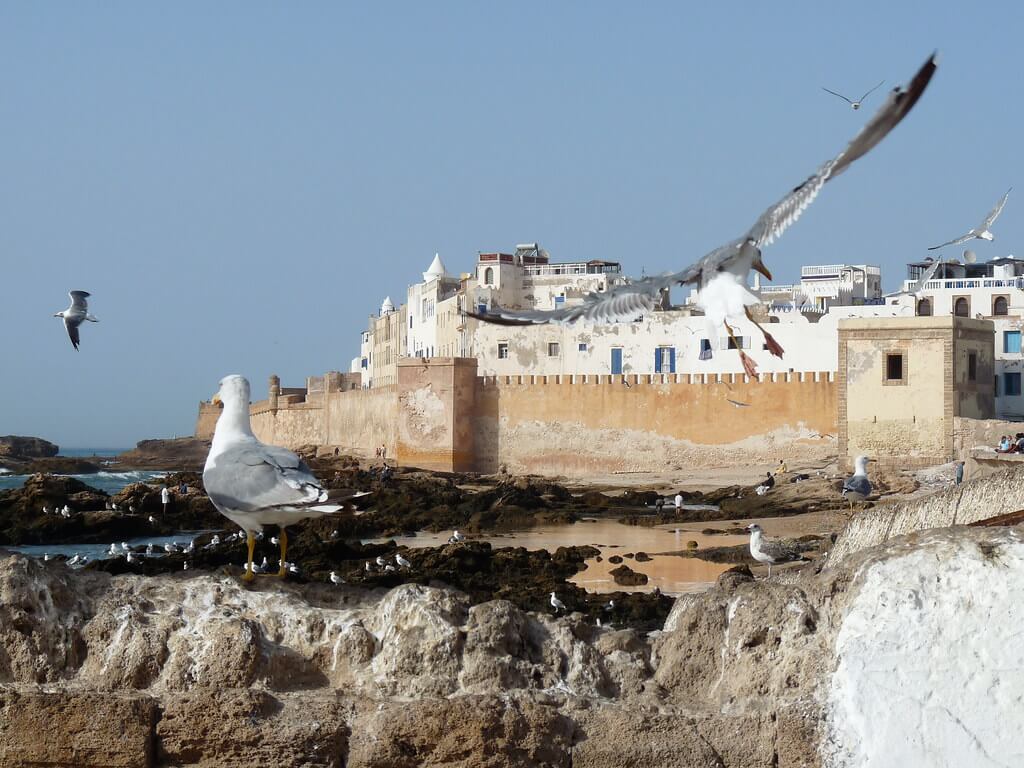
Essaouira is better known for wind than waves: strong trade winds make it one of Morocco’s kitesurfing and windsurfing capitals, and its walled medina is a UNESCO World Heritage Site. For surfing, head to Sidi Kaouki, 25 km south, or come early in the morning before the wind picks up. It is a brilliant stop on a road trip, but most surfers prefer to base themselves further south.
4. Safi
Safi is home to one of the most famous waves in Africa: a hollow right-hand point known as Le Jardin or "The Garden". On a big winter swell it produces long, heavy barrels, but it is fickle, shallow and strictly for experts. If you are not a very experienced surfer, it is a place to watch from the cliff rather than paddle out.
5. Agadir’s beaches
Agadir’s long city beach is sheltered from most swell and often too small, but just north of the city, Banana Beach at Aourir and the beaches around Tamraght are some of the best learning waves in the country, with soft sand bottoms and long, gentle whitewater.
6. Mirleft and Sidi Ifni
South of Agadir the crowds thin out. Mirleft has a string of dramatic coves and beach breaks, and the old Spanish town of Sidi Ifni has a left-hand wave and a laid-back, end-of-the-road feel. It is ideal for a surf road trip if you have your own car and want empty line-ups.
7. Rabat and the north
Morocco’s capital has its own surf scene, with beach breaks in the city and nearby Mehdia and Bouznika. The north catches more summer swell than the south but is cooler and wetter in winter, so it suits a summer city break with a few surf sessions rather than a dedicated winter surf trip.
Best Time for Surfing in Morocco
Surfing in Morocco is possible all year, but the season changes what you will find. Use this table to match the months to your level and pack the right wetsuit; water temperatures are typical for the Agadir coast.
| Months | Waves | Water | Wetsuit | Best for |
|---|---|---|---|---|
| October – November | First big swells, often clean | 19–21 °C | 3/2 mm | All levels |
| December – March | Biggest and most consistent | 16–18 °C | 4/3 mm | Intermediate and advanced |
| April – June | Medium swells, more wind | 17–19 °C | 3/2 mm | Beginners and improvers |
| July – September | Small and warm | 20–22 °C | Shorty or 3/2 mm | Beginners and families |
Surfing in Morocco for Beginners
If you have never surfed before, Morocco is one of the easiest places in the world to start. Book lessons with a qualified instructor for your first week: they will choose the right beach for the day’s conditions, give you a soft-top board and teach you safety and etiquette before you ever reach the famous points. Most surf camps include transport to the beach every day, which matters in Morocco because the best learning spot changes with the swell, wind and tide.
Our tip: book your first week of surfing in Morocco as a package with lessons, transport and equipment. You will spend your energy in the water instead of hunting for a taxi, a board and the right beach every morning.
Surf Etiquette and Local Tips
- The surfer closest to the peak has priority: never drop in on someone already riding the wave.
- Stay on the beginner beaches until you can turn and control your board; the points are crowded and rocky.
- Surf in the morning: the wind usually picks up in the afternoon, especially from April to September.
- Wear reef booties at rocky points such as Anchor Point, and use strong, reef-safe sunscreen.
Frequently asked questions
Where is the best place to surf in Morocco?
For most surfers it is the Taghazout area near Agadir: it has world-class points, beginner beaches, the most surf camps and an international airport 45 minutes away. Imsouane is a great second stop.
Is Morocco good for beginner surfers?
Yes. Sandy beaches such as Tamraght, Devil’s Rock and Banana Beach have soft, gentle waves, and warm weather means you can learn in comfort all year.
When is the best time for surfing in Morocco?
October to March brings the biggest, most consistent swells for experienced surfers. Beginners can come all year, and summer offers the smallest, warmest waves.
Do I need a wetsuit to surf in Morocco?
Yes. The Atlantic stays cool all year: a 3/2 mm wetsuit works most of the year and a 4/3 mm is more comfortable in January and February. Surf camps usually include one.
Is Essaouira good for surfing?
Essaouira is windy, so it is better for kitesurfing and windsurfing. Surfers go to Sidi Kaouki nearby or surf early in the morning, and many visit Essaouira on a day trip from Taghazout.
How much does a surf trip to Morocco cost?
Beyond flights, a surf camp week with accommodation, meals, lessons, equipment and transport is usually the best value, because everything is included in one price and you avoid daily taxi and rental costs.
The complete guide to Taghazout surf spots
Best time to surf in Taghazout, month by month
Imsouane surf guide: La Baie and La Cathédrale
Surf lessons in Taghazout: a beginner’s guide


