 English
  Deutsch
  Español
  Français
  Italiano
  Norsk bokmål
  Svenska
  Dansk
Dansk 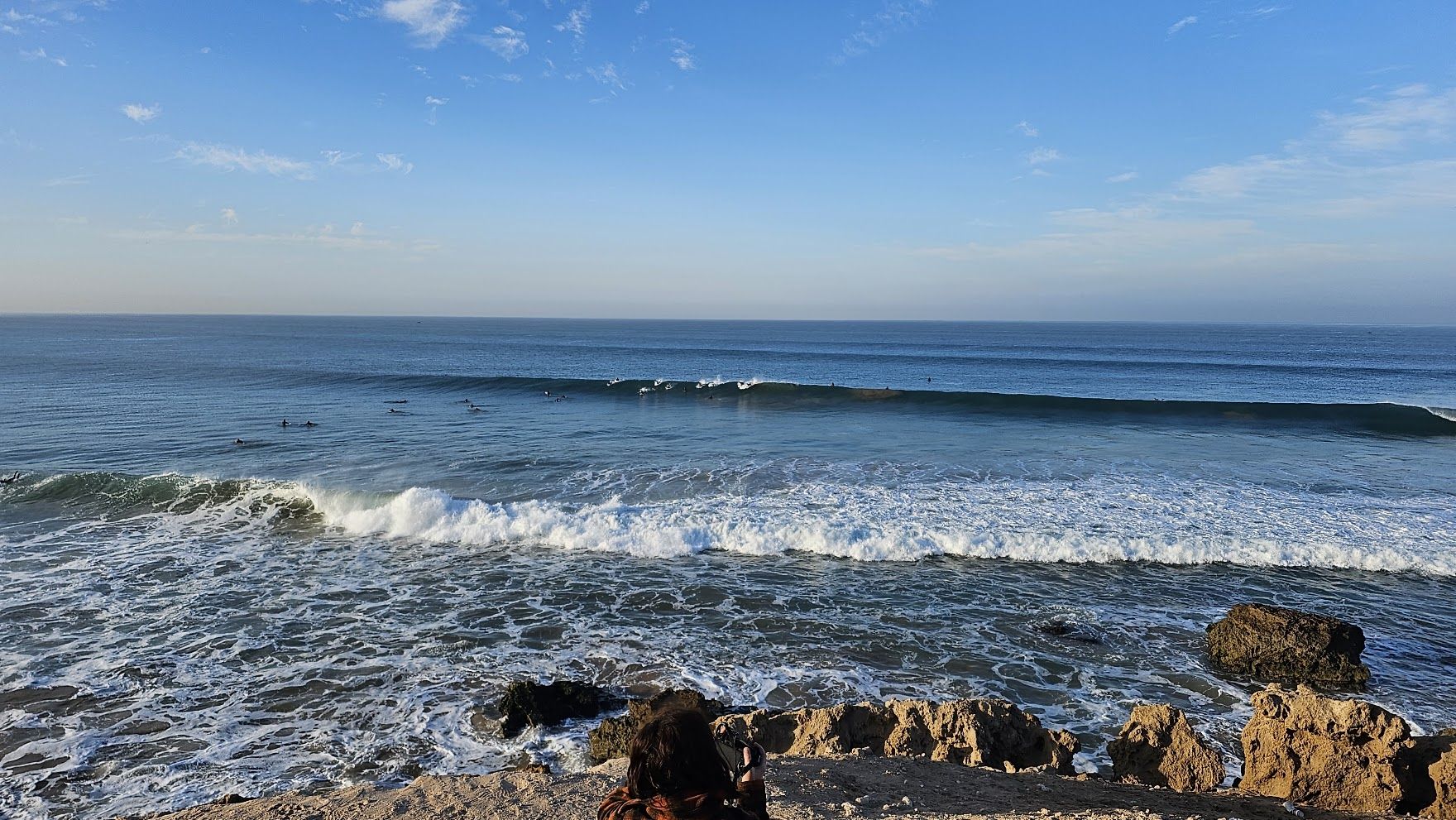
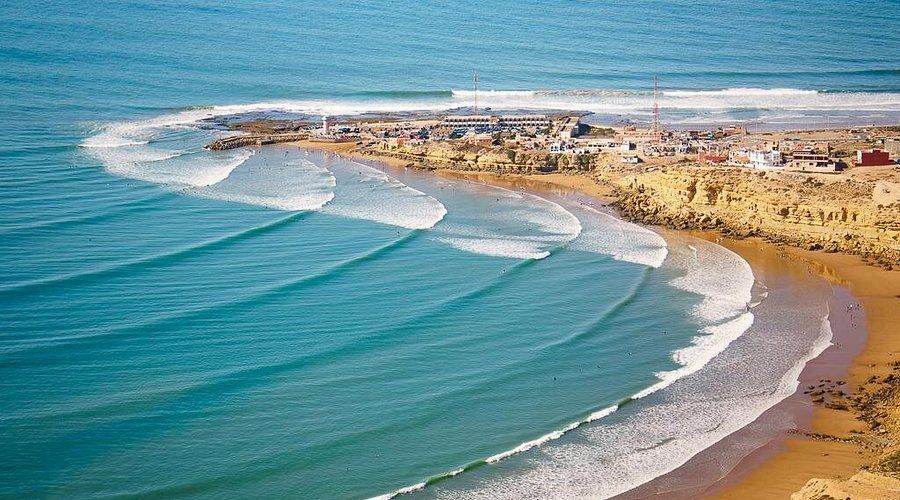
The coast around Taghazout has one of the highest concentrations of quality waves in Africa: long right-hand points that wrap around rocky headlands, reefs that throw A-frames, and soft sandy beaches where beginners take their first waves. This guide takes you through the Taghazout surf spots from north to south, with the level each one suits, when it works and what to watch out for.
Quick answer: Taghazout surf spots
- Best-known wave: Anchor Point, a long right-hand point for experienced surfers.
- Best for beginners: the sandy beaches of Tamraght (Devil’s Rock, Crocro) and Banana Beach near Aourir.
- When the points work: on north-west swells, most often from October to March.
- Best wind: light offshore from the north-east or east, usually in the morning.
On this page
Taghazout Surf Spots at a Glance
From north to south, these are the main surf spots in Taghazout Bay. The best tide is a general guide: every spot changes with the sandbanks and the swell, so check with a local surfer or instructor on the day.
| Spot | Type | Best tide | Level |
|---|---|---|---|
| Boilers | Right-hand point | Mid | Advanced |
| Killer Point | Right-hand point | Low to mid | Intermediate to advanced |
| La Source | Reef, lefts and rights | Mid to high | Intermediate |
| Mysteries | Reef, lefts and rights | Mid to high | Intermediate to advanced |
| Anchor Point | Right-hand point | Low to mid | Advanced |
| Hash Point | Right-hand point | Most tides | Improvers |
| Panoramas | Right-hand point | Low | Improvers |
| Devil’s Rock | Sandy beach break | Mid to high | Beginners and improvers |
| Crocro | Sandy beach break | Mid to high | Beginners and improvers |
| Banana Point | Right-hand point | Low | Beginners and improvers |
| Banana Beach | Sandy beach break | Mid to high | Beginners and improvers |
| Anza | Sandy beach break | Mid to high | Intermediate |
The Points North of Taghazout: For Experienced Surfers
Boilers
The most northerly of the classic points, Boilers takes its name from the old ship’s boiler that sits in the line-up. It is a fast, powerful right-hander over reef with a critical take-off, fully exposed to north-west swell. Strong currents and shallow rock make it a wave for experienced surfers only.
Killer Point
A long walk or drive along the cliffs north of the village, Killer Point is said to be named after the orcas that are sometimes seen offshore. It picks up more swell than the spots around it and can hold big waves, with a long paddle out to a heavy right-hander. On smaller days confident intermediates surf it; on big days it is for experts.
La Source and Mysteries
Between Killer Point and Anchor Point, these two reef breaks offer peaky waves that go both left and right. La Source is the more forgiving of the two and a good step up for intermediates; Mysteries has a more technical take-off. Both usually work best from mid to high tide.
Anchor Point
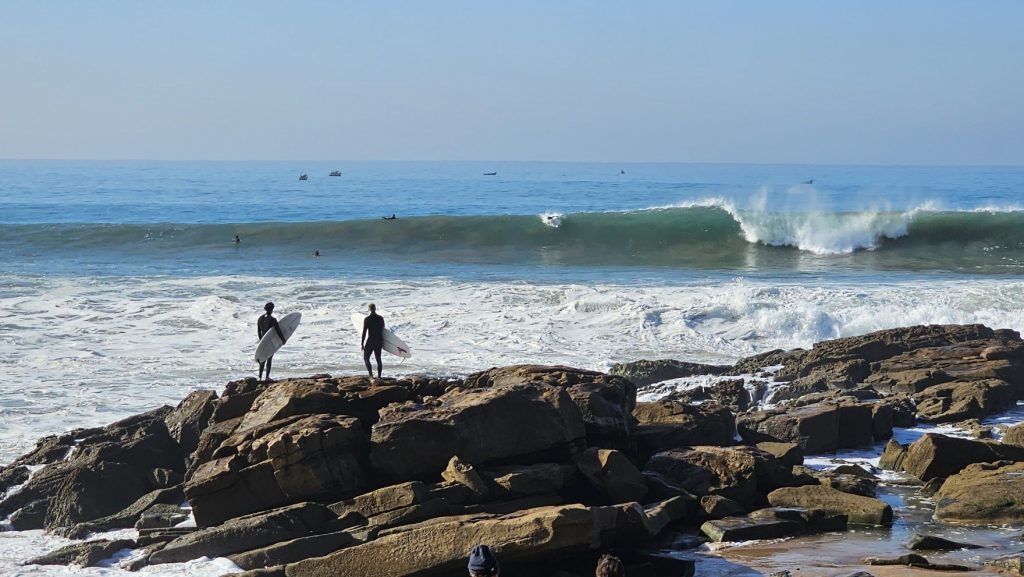
Anchor Point is the wave that made Taghazout famous and one of the best-known surf spots in Morocco. On a solid north-west swell it is a long, peeling right-hander that can run for hundreds of metres, with a take-off near the rocks at the tip of the point. It works best from low to mid tide, handles big swell and is crowded on good days, so it is strictly for experienced surfers who know point-break etiquette.
Surf Spots in Taghazout Village and Tamraght
Hash Point
Right in front of the village, Hash Point is a playful right-hander that you can watch from the cafés. It is smaller and more forgiving than the points further north, which makes it a good first point break for confident improvers. Watch out for the rocks at low tide.
Panoramas
At the southern end of Taghazout, Panoramas is a mellow right-hander over sand that peels off a small point, best at low tide on mid-sized north-west swells. It is a great wave for improvers who want longer rides without the pressure of the famous points.
Devil’s Rock and Crocro (Tamraght)
Below the village of Tamraght, these sandy beach breaks have peaky waves in both directions and several take-off zones, so there is room for everyone. They are among the most popular places for surf lessons in the bay and usually work best from mid to high tide. On bigger winter days they can also give good waves to intermediates.
Beginner Surf Spots Near Aourir: Banana Point and Banana Beach
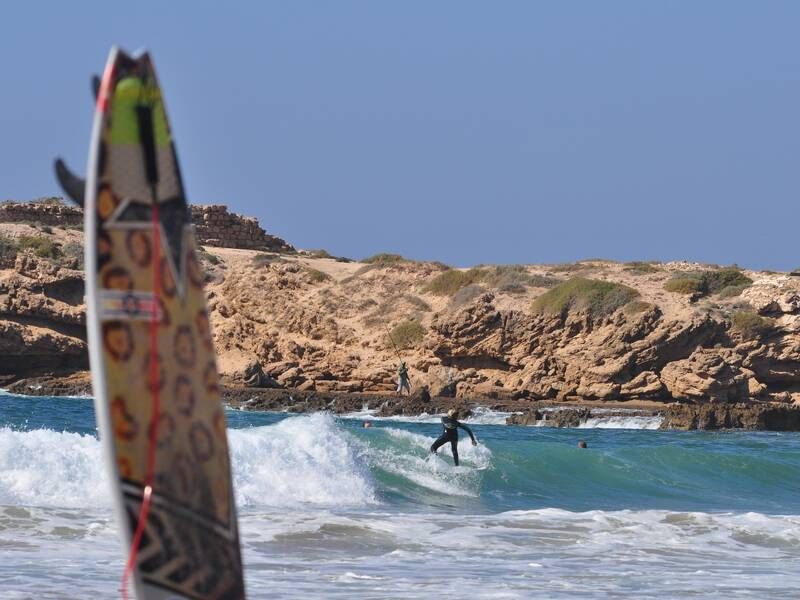
Near the village of Aourir, known for its banana plantations, Banana Beach has soft, rolling waves that are ideal for first lessons. At its northern end, Banana Point is a gentle right-hand point over sand that works on small swells at low tide, the perfect place to try your first green waves. Both are sheltered on big days, which is why surf schools use them all year.
Further south towards Agadir, Anza has a stretch of reef and beach breaks that pick up swell when the bay is small, and is mostly surfed by intermediates.
More Surf Spots in Morocco: Imsouane and Tamri
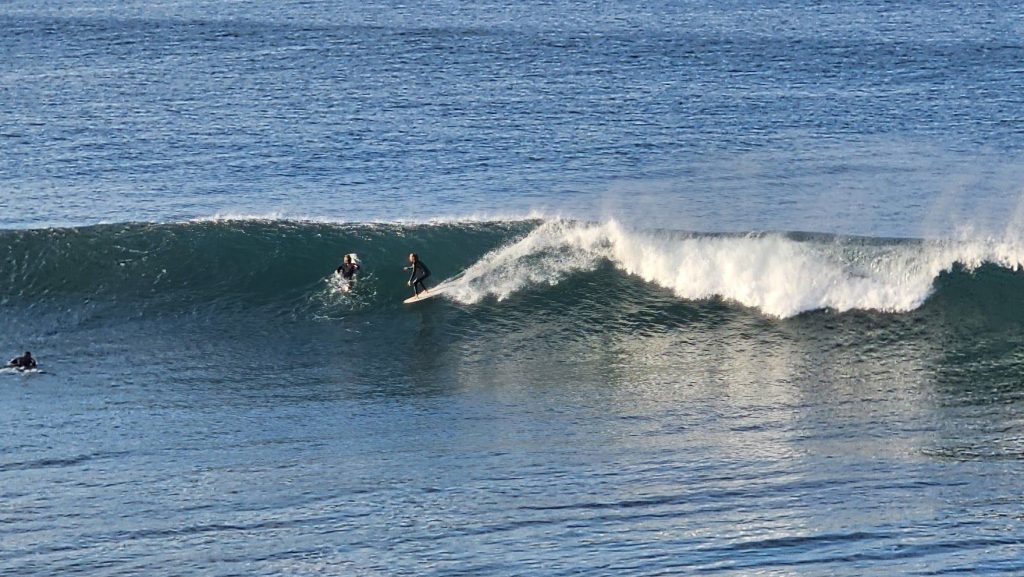
About an hour and a half north of Taghazout, the fishing village of Imsouane has one of the longest waves in Africa: a slow, peeling right-hander in the bay that suits longboarders and improving surfers, and a more powerful point known as Cathedral. On the way, the open beach of Tamri catches more swell than Taghazout Bay and often has waves when everything else is flat. Imsouane is included in our Premium and Ultimate packages.
Which Taghazout Surf Spots Suit Your Level?
The beauty of the Taghazout surf spots is that there is a wave for every stage of your surfing, often only a few minutes apart. As a rule of thumb:
- First weeks of surfing: Banana Beach, Devil’s Rock and Crocro, where you learn in white water over sand.
- Catching green waves: Banana Point, Panoramas and Hash Point on smaller days, where the waves peel gently along a point.
- Confident surfers: La Source, Mysteries and Killer Point, and Anchor Point and Boilers once you are experienced on powerful point breaks.
Whatever your level, the Taghazout surf spots change a lot with the season: the points come alive from October to March, while summer belongs to the beaches. Our month-by-month guide explains when each type of wave is at its best.
How to Read the Forecast for the Taghazout Surf Spots
- Swell direction: the points need swell from the north-west; a west swell can close them out, while the beaches still work.
- Swell period: longer periods (12 seconds or more) mean more powerful waves that wrap better around the points.
- Wind: north-east to east is offshore; the morning is usually the cleanest time, especially in summer.
- Tide: each spot has its favourite tide, so the same swell can be perfect at one break in the morning and at another in the afternoon.
Safety and Etiquette on the Taghazout Points
The surfer closest to the peak has priority, so never drop in on someone already riding, and paddle wide around the line-up instead of through it. Most points break over shallow rock and reef where sea urchins are common, so reef booties are a good idea, and enter and exit the water where the locals do. Be respectful: many of the people in the water grew up surfing these waves.
Our tip: you do not need to know every spot yourself. At a surf camp, the team checks the swell, wind and tide every morning and drives you to the break that suits your level that day, which is the easiest way to surf the best of Taghazout Bay.
Frequently asked questions
What is the best surf spot in Taghazout for beginners?
The sandy beach breaks of Tamraght and Banana Beach near Aourir are the usual choices, but the best spot changes daily with the swell and tide. Instructors choose it each morning.
When do the Taghazout point breaks work?
The points need a decent north-west swell, which is most common from October to March. In summer they are often flat, while the beach breaks keep working.
Can intermediate surfers surf Anchor Point?
On small, clean days a confident intermediate can, with care, but Anchor Point is a powerful wave over rock and crowded with experienced locals. Hash Point and Panoramas are better places to build up your point-break skills first.
Do I need reef booties in Taghazout?
Not on the sandy beaches, but they are a good idea on the rocky points, where sea urchins are common, especially when getting in and out of the water.
Are there left-hand waves in Taghazout?
The famous points are rights, but the reefs of La Source and Mysteries and the beach breaks of Tamraght and Banana Beach offer lefts as well, depending on the sandbanks.
How do I get to the surf spots from a surf camp?
Most of our packages include daily transfers to the spot that suits the conditions and your level. With Surf & Stay, which has no transfers, you surf the breaks you can reach yourself.
Best time to surf in Taghazout, month by month
See the Ultimate week with trips to Imsouane


