 English
  Deutsch
  Español
  Français
  Italiano
  Norsk bokmål
  Svenska
  Dansk
Dansk 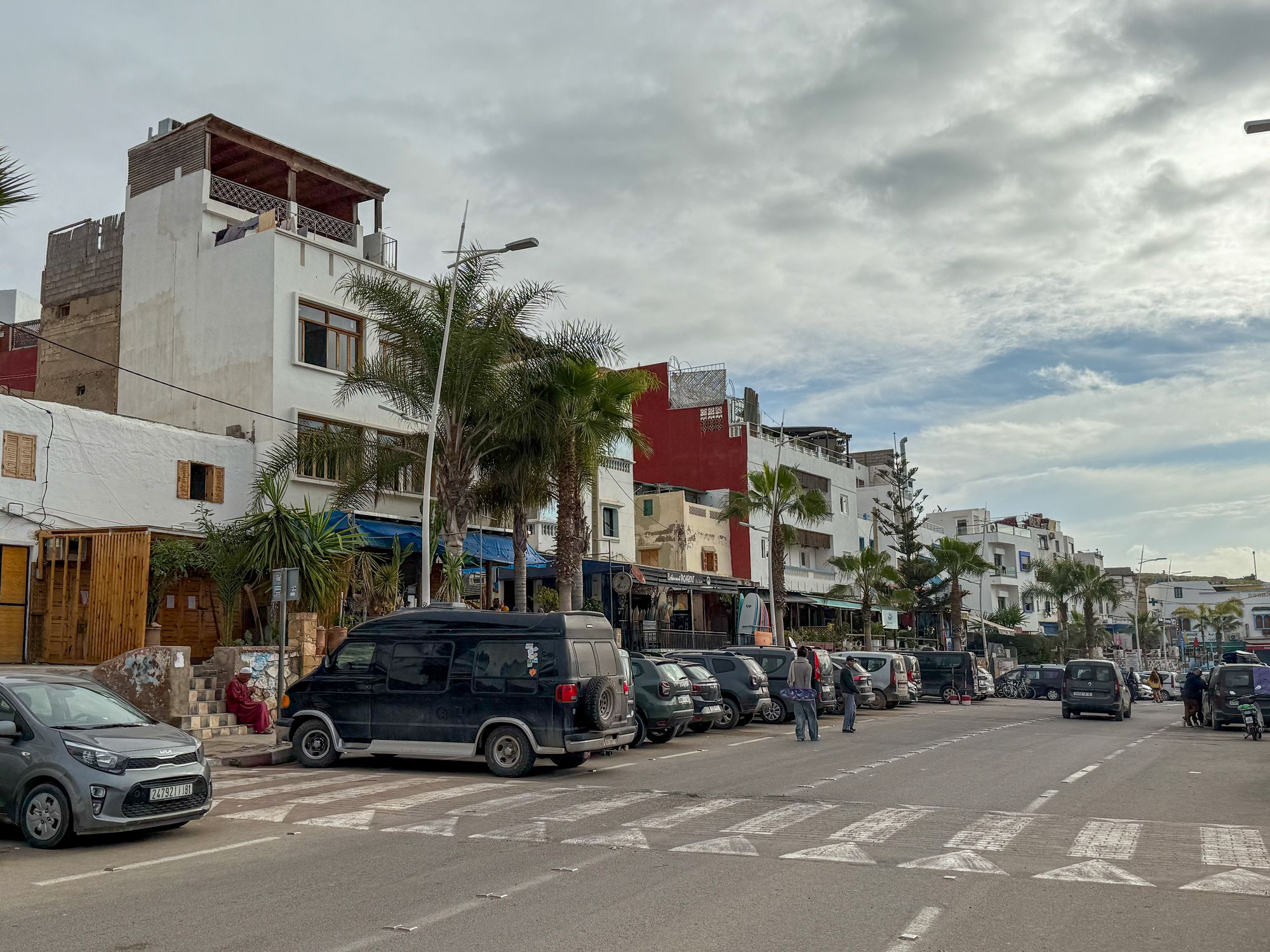
Taghazout, Morocco is one of the best-known surf villages in the world, yet it still feels small, friendly and unmistakably Moroccan. Colourful houses climb the hill above a fishing harbour, famous right-hand point breaks wrap around the headlands, and the sun shines almost every day of the year. Whether you are coming for a surf camp, a yoga retreat or simply a winter escape, this guide covers everything you need to plan your trip.
Quick answer: Taghazout, Morocco
- Where: a fishing and surf village on the Atlantic coast, 19 km north of Agadir.
- Getting there: fly to Agadir Al Massira; the drive takes 45 minutes to an hour.
- Best time: all year for learning; October to March for the famous point breaks.
- How long: three days for a taste, a week to really learn to surf and explore the area.
On this page
Where Is Taghazout, Morocco?
Taghazout sits on Morocco’s southern Atlantic coast, 19 km north of the city of Agadir, where the Anti-Atlas foothills run down to the ocean. It is the northernmost of three villages along Taghazout Bay, with Tamraght and Aourir a few minutes to the south. The coast road links them all, and the bay faces the Atlantic swells that give the area its world-famous waves. Here is how far Taghazout is from the places you are most likely to travel from or visit:
| From Taghazout to | Approximate distance | Travel time by car |
|---|---|---|
| Tamraght | 5 km | A few minutes |
| Agadir | 19 km | About 30 minutes |
| Agadir Al Massira Airport | 44 km | 45–60 minutes |
| Imsouane | ~90 km | About 1 hour 30 |
| Essaouira | 152 km | A long day trip |
| Marrakech | ~260 km | About 3 hours |
A Short History of Taghazout
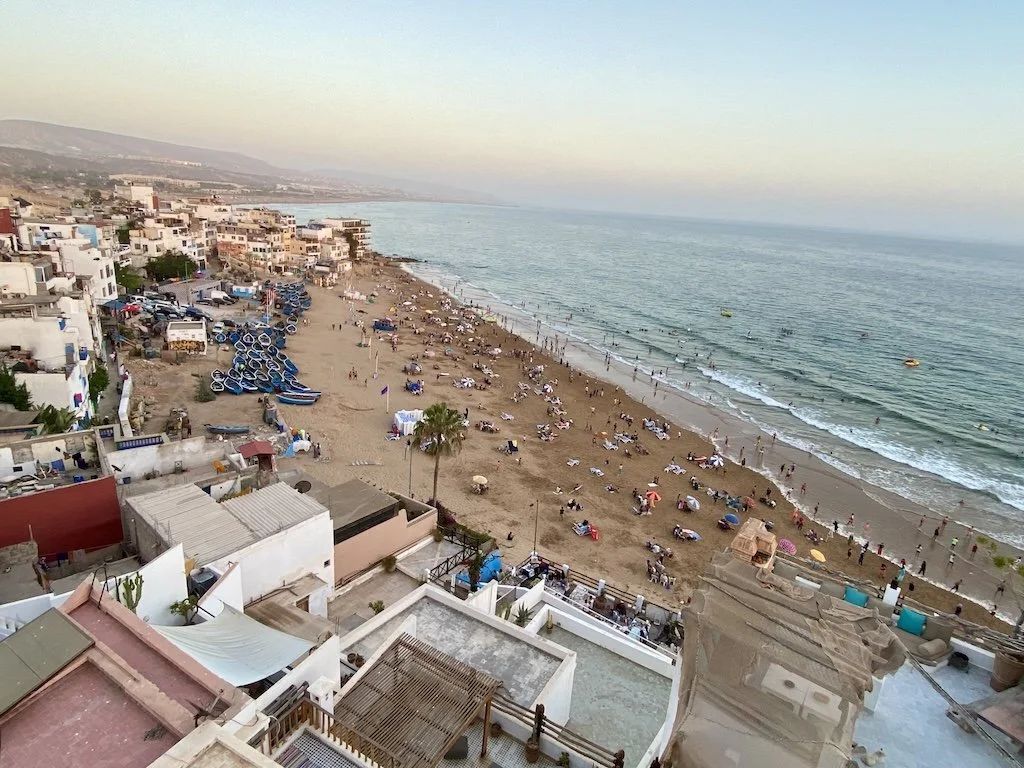
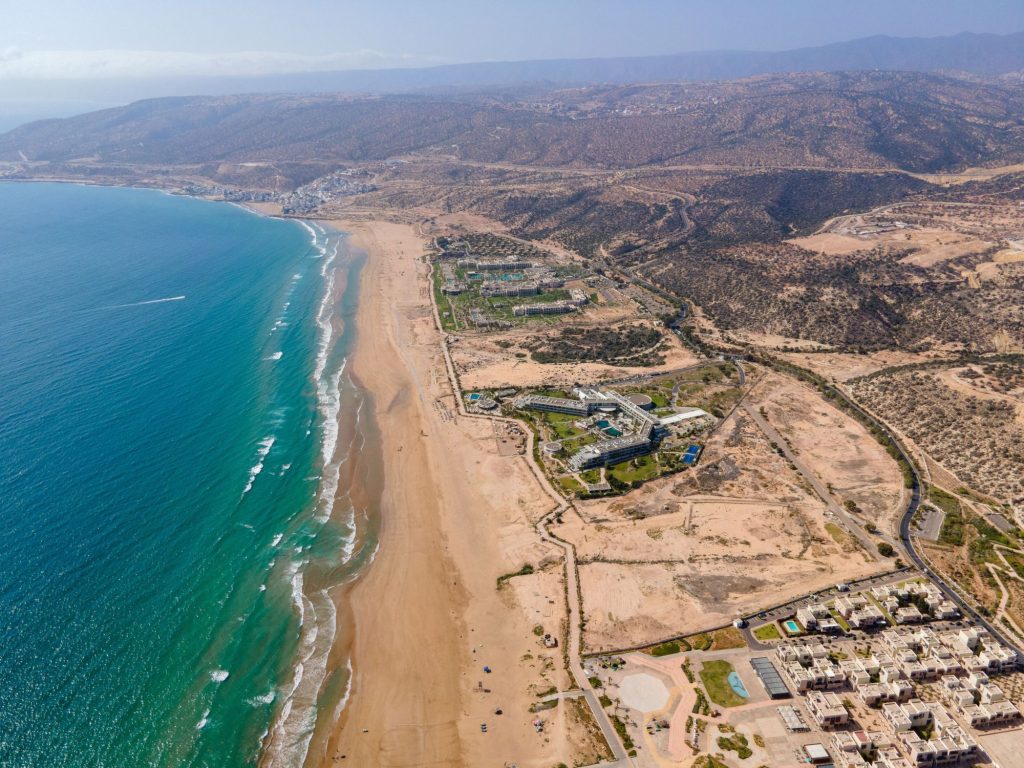
Taghazout, Morocco began as a Berber fishing village, and most families in the village still have Amazigh (Berber) roots. In the late 1960s and 1970s it became a stop on the hippie trail, and travellers in camper vans discovered the long right-hand waves breaking around its headlands. Word spread through the surfing world, and over the following decades Taghazout grew into a small surf town without losing its fishing harbour or its everyday village life. Just south of the village, the Taghazout Bay resort project has since added hotels, a golf course and a promenade, while the old village remains the heart of the area’s surf culture.
Surfing in Taghazout
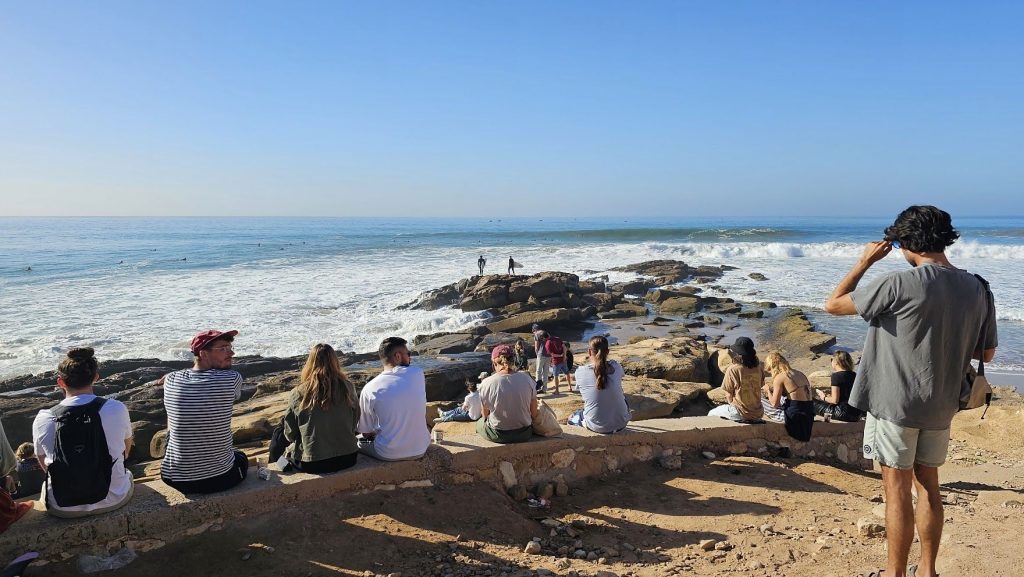
The waves are the reason most people come to Taghazout, Morocco. North of the village, right-hand point breaks such as Anchor Point, Killer Point and Boilers come alive on the winter swells and attract experienced surfers from all over the world. Right in front of the village, Hash Point and Panoramas are friendlier, and a short drive south, the sandy beaches of Tamraght and Banana Beach near Aourir are ideal for learning. With so many spots facing slightly different directions, there is almost always somewhere to surf, whatever your level.
When to Visit Taghazout, Morocco
Taghazout has one of the sunniest climates in Morocco, with more than 220 hours of sunshine every month and afternoon highs from about 21 °C in January to 27 °C in August. From October to March, North Atlantic swells light up the points and the sea is around 17 to 20 °C; from May to September the waves are smaller, the water warmer and conditions perfect for beginners and families. Winter holidays are the busiest weeks, while late October, November and early March combine good waves with more space.
Where to Stay in Taghazout, Morocco
You can stay in Taghazout village itself, in the calmer villages of Tamraght and Aourir, or in the resort hotels of Taghazout Bay. Surf camps are the most popular choice for surfers because they combine accommodation, meals, lessons or daily transfers and local knowledge in one booking. Our own surf house sits between Aourir and Tamraght, with a pool, a panoramic terrace and three meals a day, so you get the whole bay without living in the busiest village.
Food and Drink in Taghazout
Food is one of the highlights of a trip to Taghazout, Morocco. Try slow-cooked tagines, couscous on Fridays, grilled sardines and fish straight from the harbour, fresh orange juice and endless glasses of sweet mint tea. Breakfasts often include msemen (flaky pancakes), olives, eggs and local honey. Most village cafés do not serve alcohol; it is available in some hotels, in the Taghazout Bay resort and in Agadir.
Money, Language and Practical Tips for Taghazout, Morocco
- Currency: the Moroccan dirham (MAD). Cash is king in the village; take some out at the airport or in Agadir.
- Languages: Moroccan Arabic (Darija) and Tachelhit are spoken locally; French is common and English is widely understood in the surf community.
- Phone and internet: local SIM cards with data are cheap and easy to buy; most cafés and surf camps have WiFi.
- Electricity: 220 V with European two-pin plugs (types C and E).
- Respect: dress modestly away from the beach, ask before photographing people and greet with a smile: "salam".
How Long to Stay in Taghazout
| Time you have | What you can do | Our matching package |
|---|---|---|
| 3 days | Three surf lessons and a taste of village life | 3-Day |
| 5 days | Stand up on the board, a yoga class and Agadir souk | 5-Day |
| 1 week | Real progress in the water, plus Paradise Valley and more | All Inclusive, Premium, Ultimate |
| 1 week, with children | Lessons for the whole family and a room for five | Family |
Our tip: if you can, give yourself a full week in Taghazout, Morocco. Surfing clicks after a few days of daily practice, and a week leaves time for a rest day in Paradise Valley or at the souk without feeling rushed.
Frequently asked questions
Is Taghazout worth visiting?
Yes, especially if you surf or want to learn. It combines world-class waves, reliable sunshine, good food and a relaxed village atmosphere, just 45 minutes from an international airport.
How do I get to Taghazout, Morocco?
Fly to Agadir Al Massira airport, then take a surf camp pick-up, a grand taxi or the bus up the coast. The drive takes 45 minutes to an hour.
Is Taghazout good for beginners?
Yes. The famous points are for experienced surfers, but the sandy beaches of Tamraght and Banana Beach nearby are among the best places in Morocco to learn.
What language is spoken in Taghazout?
Moroccan Arabic and Tachelhit (a Berber language) are spoken locally. French is widely used, and in cafés, surf shops and surf camps you will get by in English.
Is Taghazout expensive?
Everyday costs such as local food, taxis and mint tea in Taghazout, Morocco are low by European standards. A surf camp package is usually the best value, because accommodation, meals, equipment and lessons are bundled into one price.
Can I visit Taghazout in winter?
Yes, winter is peak surf season: sunny days of around 21 to 22 °C, the best waves on the points and water around 17 °C. Bring a warm layer for the evenings.
Best time to surf in Taghazout, month by month
The complete guide to Taghazout surf spots
How to get from Agadir airport to Taghazout


